

Hello dear readers,
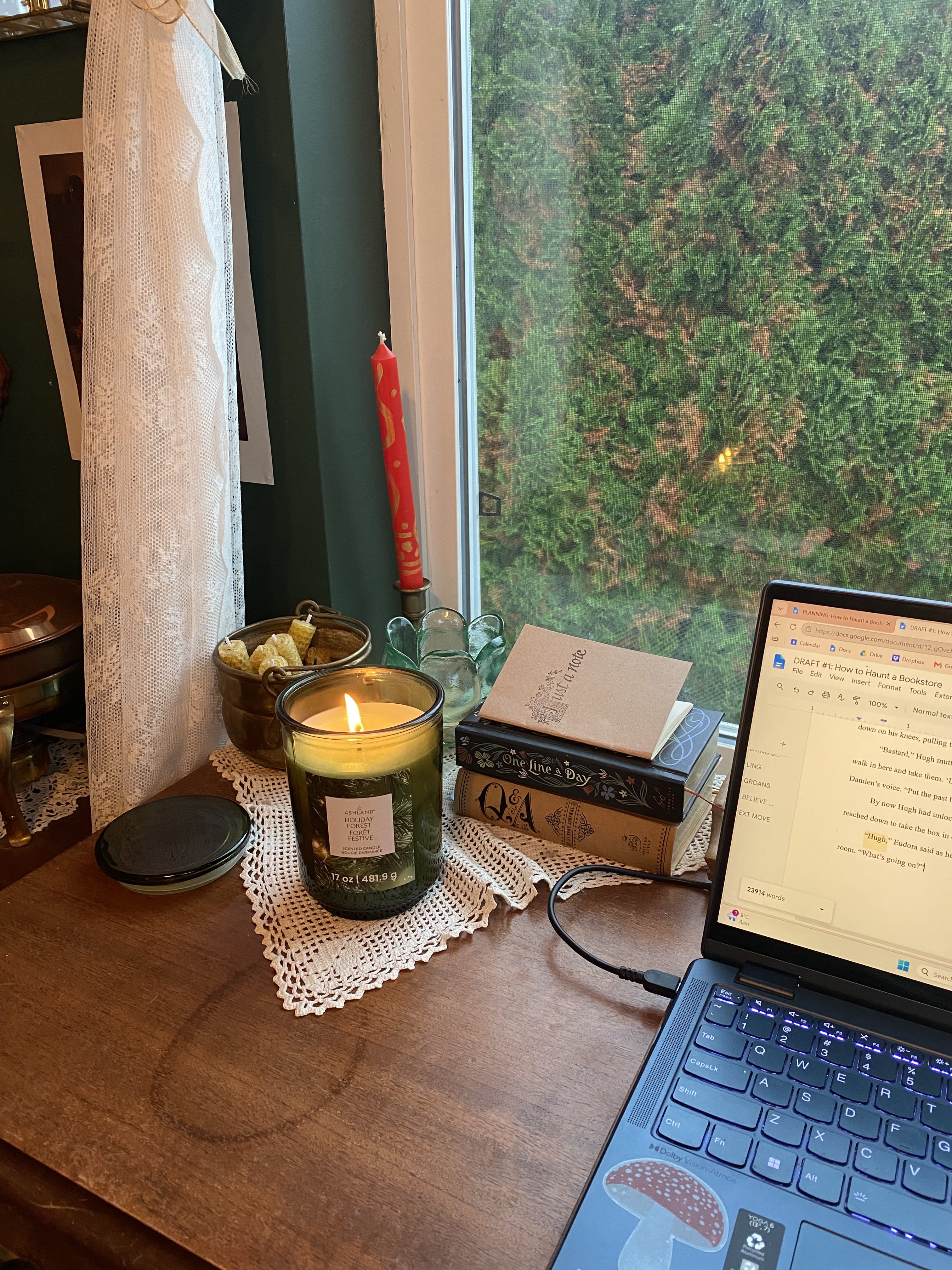
I write to you from my office, my second cup of coffee sitting in front of me. A storm has been blowing since last night, and right now rain hammers against my windows and wind churns the maple leaves from their trees across the road.
In honour of my return to NovNov¹, I thought I’d tell you a little about my writing process², because everyone I’ve spoken with in the past few months has seemed surprised by it. I’ve written a lot of novels³, and have whittled down what works well for me, though I know it won’t work for everyone!
To start, I create a planning document, where I write a basic synopsis of the story, followed by characters, locations, and any important points I want to hit during the writing process. Often, I’ll have an idea of how I want the novel to end, and will work toward that when I’m writing.
This is where things get a little strange. I may outline what I plan to write, but in the actual process of writing, I’m constantly surprised by what comes out. I might have thought that a character would need to speak with this person, or go to this location, but it almost never turns out the way I expect—new characters make themselves known, and new locations materialize, and new plot points work their way in. Every time I’ve written a novel, the synopsis I write at the beginning has changed by the end—and always in substantial ways.
So, while unplanned events are constantly occurring, they’re always what the story needs. I know authors always say things like “the characters speak to me” or “I let them decide what they want to do,” but it’s true! This isn’t some magical process; I believe it’s my subconscious determining for me where the story will go⁴.
This means that I find things out about the story and my characters as I’m working my way through, so in later drafts, I’m always going back and adding additional descriptions and hints in earlier parts of the story. This is where the planning document really shines: at the bottom of the document, I have checkmarked points for the next draft, and add notes and ideas to this list as I go. When I get into revisions, I always know exactly what the draft needs, because I’ve documented it as I worked.
What I’ve come to understand is that the planning document is really just a way to collect and process my thoughts, rather than being a blueprint for how the story needs to unfold. I’ve always communicated best through writing, so it’s more like a place where I can have a conversation with myself, to work out the story’s bumps along the way.
One more thing: I write a full chapter at a time. I know some people like to work in bursts, or only write a certain number of words per day, but I’ve found that if I write a chapter from start to finish, it’s a lot easier to write the next one the following day. After I’ve finished a chapter, I leave myself a short comment on the heading for the next chapter for what I think should happen; sometimes this stays the same, other times not, but it works well as a jumping off point either way.
To sum up: my original plan is never what the book ends up looking like; the story unfolds as I go, and I’m just as surprised by the result as a reader might be. So, while I may appear to be a planner, I’m completely a fly by the seat of my pants sort of writer. Which works wonders for me!
I have a lot more to say in terms of revising, but I’m going to save that for another post. So, I hope you’re well, and that you’re enjoying your November, wherever you are.
—Catherine

footnotes
¹ At the time of writing this—November 7—I’m at 10,343 words. I’ll be writing later today, though, so I expect I’ll be closer to 13,000 by then. I’ve been writing a chapter a day, which has been all sorts of interesting.
² Only for the first draft, though. Subsequent revisions have their own formula, and are a lot more structured.
³ A lot of them were just for fun in the past; it’s only this year that I’ve started sending them out. More on this soon, I promise!!
⁴ I’ll tell you more about this when I talk about my revision process—I’m hoping to do a blog post on that soon.

Like this post and want to see more? Type your email into the space above to receive updates when new blog posts are added, head over to the blog’s main page, or click the “next” or “previous” buttons below.
Home | About | My Books | Publications | Newsletter | Contact



Leave a Reply